
By Juan Carlos Sosa Azpúrua, LLM
⸻
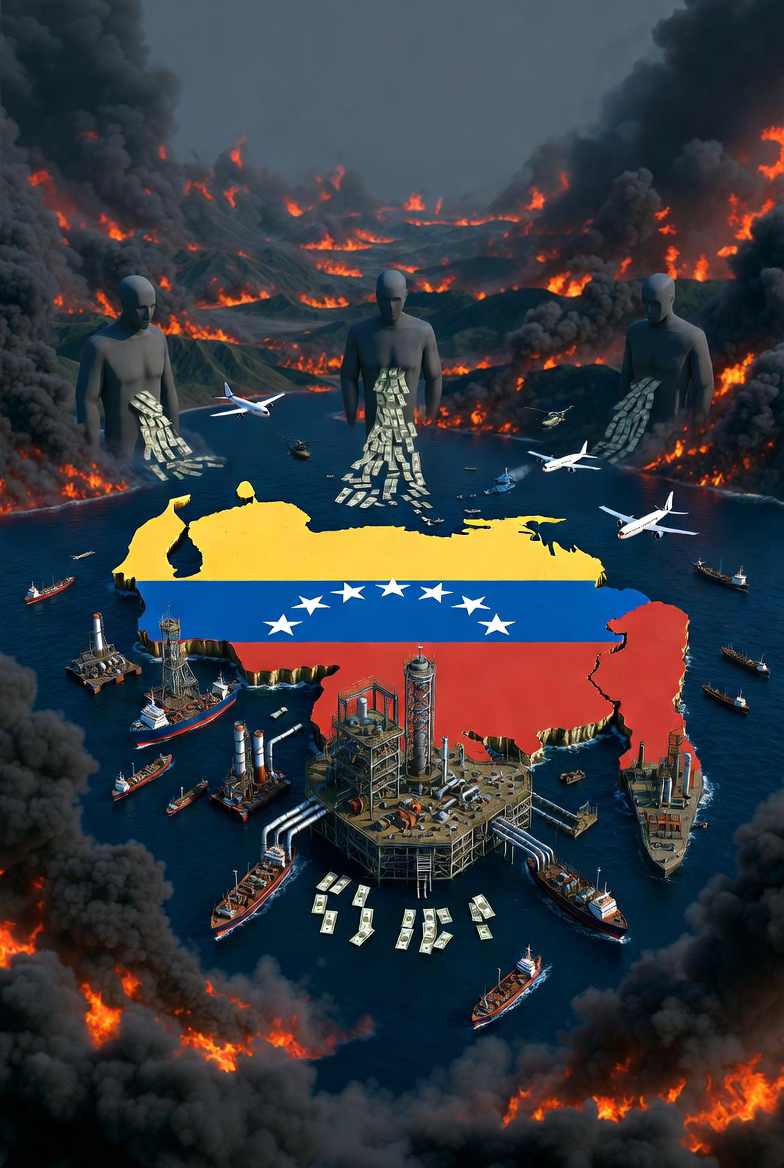
In international energy law, there are exceptional moments when legal reform, geopolitical alignment, and resource endowment converge to open rare investment windows.
Venezuela has entered one of them.
From the perspective of international practice—where risk is not avoided but structured—the question is no longer whether Venezuela is investable. The question is whether investors possess the legal and strategic framework required to invest correctly in Venezuela.
This is not a theoretical proposition: preliminary structures, advanced discussions, and concrete positioning strategies are already beginning to emerge around these opportunities.
System Reconstruction: Law as Strategic Infrastructure
Since January 2026, the country has moved toward a profound reconfiguration of its hydrocarbons framework.
The new scheme aims at:
- Full private-sector participation across the entire value chain
- More competitive and adaptable fiscal regimes
- Greater flexibility in royalty structures
- International arbitration as a central protection mechanism
Venezuela is transitioning toward a model that, if properly structured, can align with international investment standards.
It is precisely at this early structuring phase that the most relevant opportunities are currently concentrated.
The External Anchor: Strategic Backing from the United States
The defining element of this moment is not only internal reform, but the presence of a powerful external geopolitical anchor.
The United States has advanced in:
- Granting operational licenses to energy companies
- Facilitating the return of Western capital
- Reestablishing its diplomatic presence
This enables:
- Structuring transactions within U.S.-compatible legal frameworks
- Channeling financing through supervised mechanisms
- Anchoring disputes in international arbitration
In practical terms, this transformation is already being incorporated into the design of real-world transactions.
A World in Tension: Oil, Geopolitics, and Prices
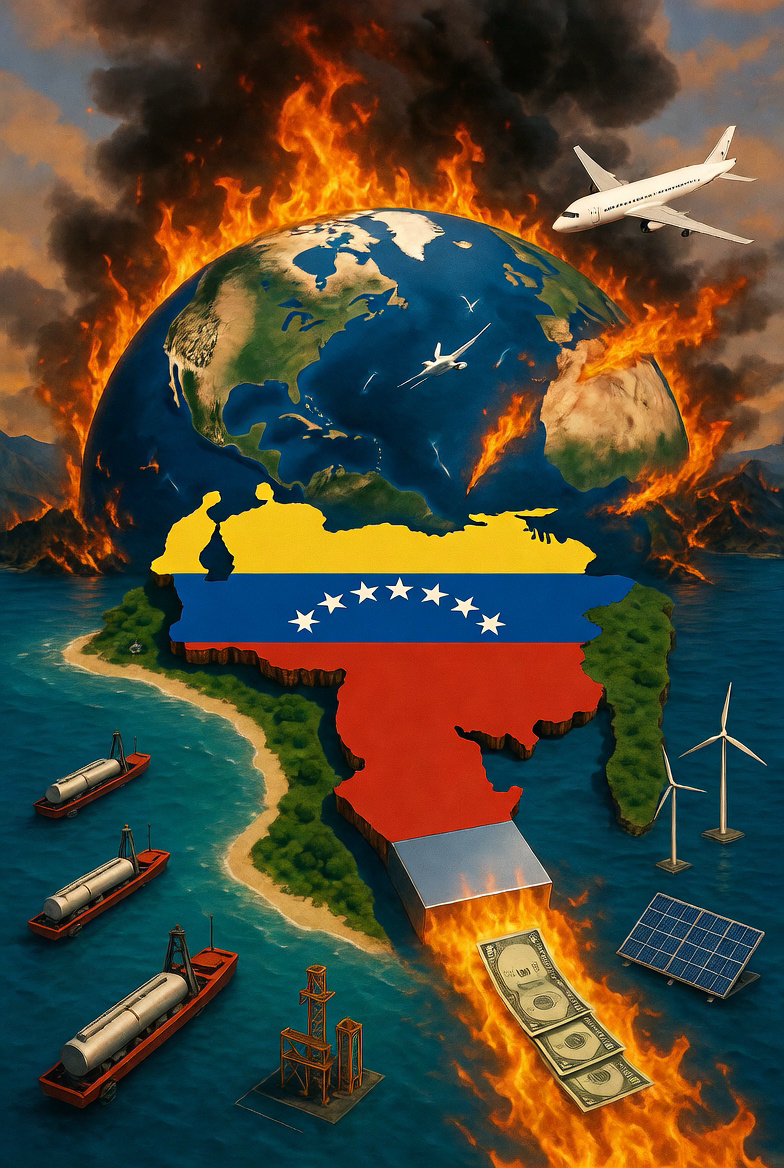
The conflict with Iran and instability in the Middle East have reshaped the global energy landscape.
- Oil prices under upward pressure
- Potential disruptions in critical supply routes
- Urgent need to diversify supply
This has produced a clear phenomenon: global energy capital is rapidly seeking new jurisdictions.
In this context:
- U.S. shale shows signs of maturity
- global exploration is reactivating
- companies are seeking large-scale reserves
Venezuela—holding the world’s largest proven reserves—re-emerges as a structural solution.
The Movement of Sophisticated Capital
Global players are already repositioning:
- Chevron and Shell are negotiating significant oil and gas production agreements
- ExxonMobil has deployed technical teams to assess opportunities
- Repsol and Eni remain in active discussions
Even more revealing:
Service companies such as Halliburton, SLB, and Baker Hughes are preparing for rapid operational deployment. These firms could capture billions of dollars in energy reconstruction contracts.
This is not speculation. It is anticipatory positioning.
Beyond Oil: The Economic Multiplier Effect
The impact extends far beyond the energy sector.
Venezuela’s reopening implies the reactivation of an entire connected economy:
Banking and Financial Sector
- Structured project financing
- International banking for energy flows
- Compliance and multilateral frameworks
The financial sector becomes the circulatory system of the new energy cycle.
Infrastructure, Construction, and Real Estate
- Rehabilitation of refineries and oil fields
- Logistics development (ports, storage, transportation)
- Urban and corporate expansion
Each additional barrel implies physical investment.
Industry and Services
Global companies such as:
- Halliburton (oilfield services)
- SLB (energy technology)
- Baker Hughes (infrastructure and equipment)
are already anticipating operational deployment.
At the industrial level, companies like Siemens and General Electric typically enter these cycles through:
- electrification
- automation
- energy infrastructure
Professional Services
- law firms
- strategic consulting
- auditing
- corporate structuring
This is where invisible value is captured: the architecture of the deal.
Production and Growth: Activating Latent Capacity
Production already shows clear signals:
- Approximately 1.1 million barrels per day as of March 2026
- Sustained growth trend
- Significant expansion potential
Venezuela does not need to discover oil. It needs to reactivate capacity.
And that implies speed.
The Structural Lesson: The Contract Replaces the Institution
Sophisticated investors understand: in complex markets, the contract becomes the institution.
This is already reflected in:
- preliminary contractual structures
- international arbitration design
- investment protection frameworks
Historical Precedents: Investment Before Stability
This phenomenon is not exceptional.
It is recurrent in the history of oil. Major energy expansion cycles have occurred precisely in contexts of institutional transition or political uncertainty, where contractual law substitutes for state stability.
🇮🇶 Iraq (2008–2010): Return of the Majors Amid Fragility
Following the 2003 invasion, Iraq reopened its energy sector amid instability.
- Companies: BP, Shell, ExxonMobil, Total
- Context: internal conflict, political transition
- Result: allocation of contracts for some of the world’s largest fields
In 2009, Iraq auctioned major oil fields, laying the groundwork for production growth.
🇦🇴 Angola (2000s): Post-War Investment Surge
After the civil war ended in 2002:
- Companies: BP, Total, ExxonMobil
- Contracts: production sharing agreements
- Result: multi-billion offshore developments
Angola rapidly became a leading African producer.
🇰🇿 Kazakhstan (1990s–2000s): Post-Soviet Opening
- Companies: Chevron, ExxonMobil, Eni, Shell
- Flagship project: Tengiz
- Investment: over $40 billion
All within a context of evolving institutional frameworks.
🇳🇬 Nigeria (1990s–2000s): Investment Amid Conflict
- Companies: Shell, ExxonMobil, Chevron
- Context: Delta conflict
- Result: continued offshore and deepwater development
Investment did not stop—it was structured.
🇦🇿 Azerbaijan (1994): “Contract of the Century”
- Companies: BP, Amoco, Unocal, Statoil
- Investment: over $10 billion
Signed in a fragile post-Soviet context, this contract transformed the country’s economy.
In all these cases, capital did not wait for institutional perfection.
It relied on sophisticated contractual structures to anticipate it.
The Role of the Great Lawyer: Risk Engineering
This is the decisive factor.
It is not about drafting contracts.
It is about:
- anticipating political scenarios
- structuring protections
- designing corporate vehicles
- turning uncertainty into advantage
In practice, this is already translating into real mandates and evolving structures.
Why the Moment Is Now
Timing defines returns.
Those who enter today gain:
- greater negotiating power
- access to undervalued assets
- structural advantage
Those who enter late:
- pay more
- accept predefined terms
- lose positioning
Decisions being made today will define the next energy cycle.
Conclusion: Judgment, Not Perfection
Venezuela does not offer perfection.
It offers something more relevant:
- legal reform
- geopolitical backing
- favorable global context
- movement of sophisticated capital
- economic multiplier effect
Opportunities are no longer abstract.
They are beginning to take shape.
As Heraclitus wrote: “Character is destiny.”
In international investment, character translates into judgment.
The question is not whether Venezuela is perfect.
The question is who has the legal, financial, and strategic capability to structure these opportunities before the rest of the market catches up.





Deja un comentario