
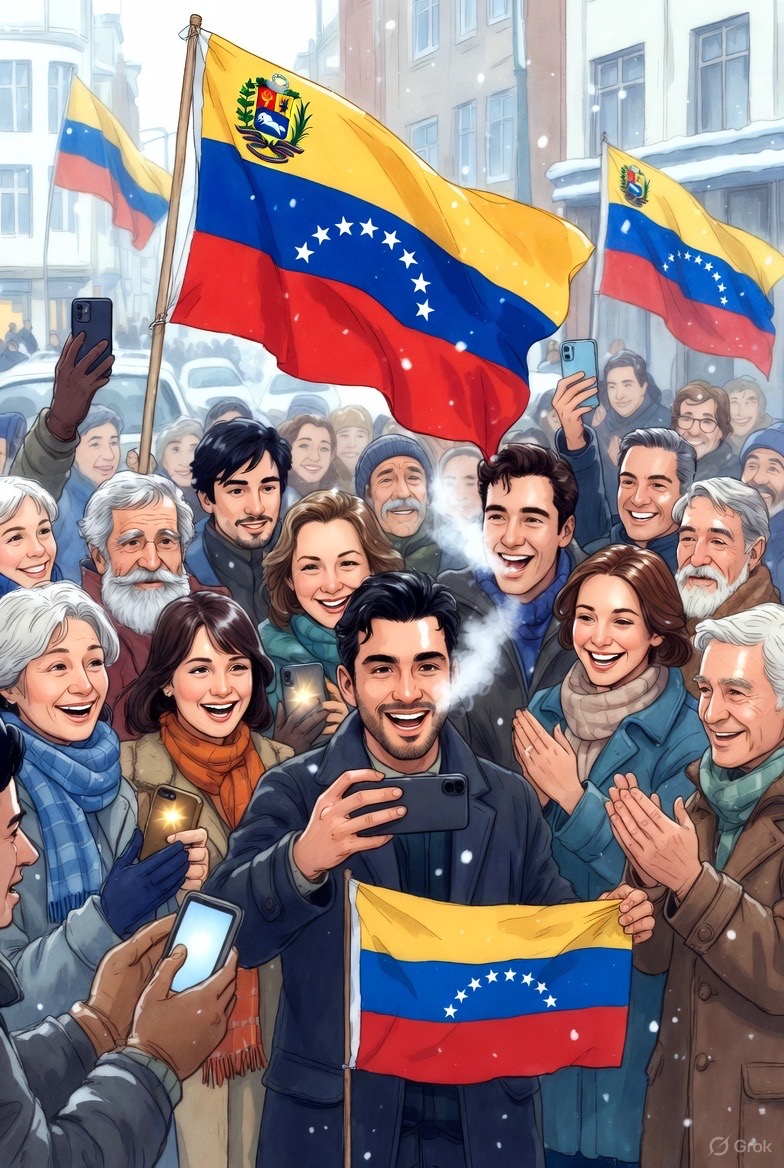
In Oslo, one could breathe freedom. In that cold country, with its fjords that are a miracle of nature, we were able to observe from afar the existence of another Venezuela — one that lives a reality very different from the Venezuela located in South America, on the coasts of the Caribbean Sea.
Thanks to selfie culture and the Kardashian showing off style, thousands of videos have circulated showing smiling faces stepping off airplanes, sending greetings from airports, walking down streets, eating and drinking in restaurants, checking into luxury hotels, and embracing one another in displays of brotherhood that shine with the colors of a truth we all know: these twenty-six years of chavismo have not been the same for everyone.
There exists a parallel universe where people who were born in poor neighborhoods and grew up riding buses and hitching rides, thanks to their political activism and their “fight for the freedom of Venezuela,” now dress better than the Prince of Wales and can afford a lifestyle once reserved for those involved in capitalist enterprises or for families with generations of prosperity behind them.
But chavismo worked a peculiar miracle: the main political actors — and also the representatives of what was once called the “student movement” — managed to spend years blocking streets, burning tires, creating chaos, and demanding economic sanctions for the country, and in that very same period obtained a status that now allows them to live without working in First World countries, traveling anywhere on the planet with all expenses paid, recording videos about Venezuela and how terrible the nation they abandoned has become.
Blowing smoke from their mouths (thanks to the winter weather), they address their virtual audiences with proclamations about the imminent change that is coming, about the bravery of the Venezuelan people, and about the need to keep fighting. Among them, one can also find journalists who have understood that there exists a kind of journalism that can indeed generate high material dividends — one only has to tell people what they want to hear and dazzle the audience with news of actions that will supposedly bring the happiness and prosperity everyone longs for.
All it takes is getting close to some politician linked to humanitarian aid, or perhaps some former mayor or governor emerging from the once-celebrated “spaces,” or any of the virtual institutions that have been created in exile — and suddenly the world of luxury and material possibilities opens wide.
Oslo offered a perfect image of the other Venezuela: the Venezuela of the fighters for freedom who, in fact, have achieved that freedom for themselves — and perhaps that encourages them to believe they are authorities on the subject. Maybe in Oslo some consciences hope to find peace.
Meanwhile, in the other Venezuela — the one facing the threatening Caribbean — the sky is darker, there are no fjords, and the only smoke that comes out of anyone’s mouth is the breath of hunger.


Deja un comentario