
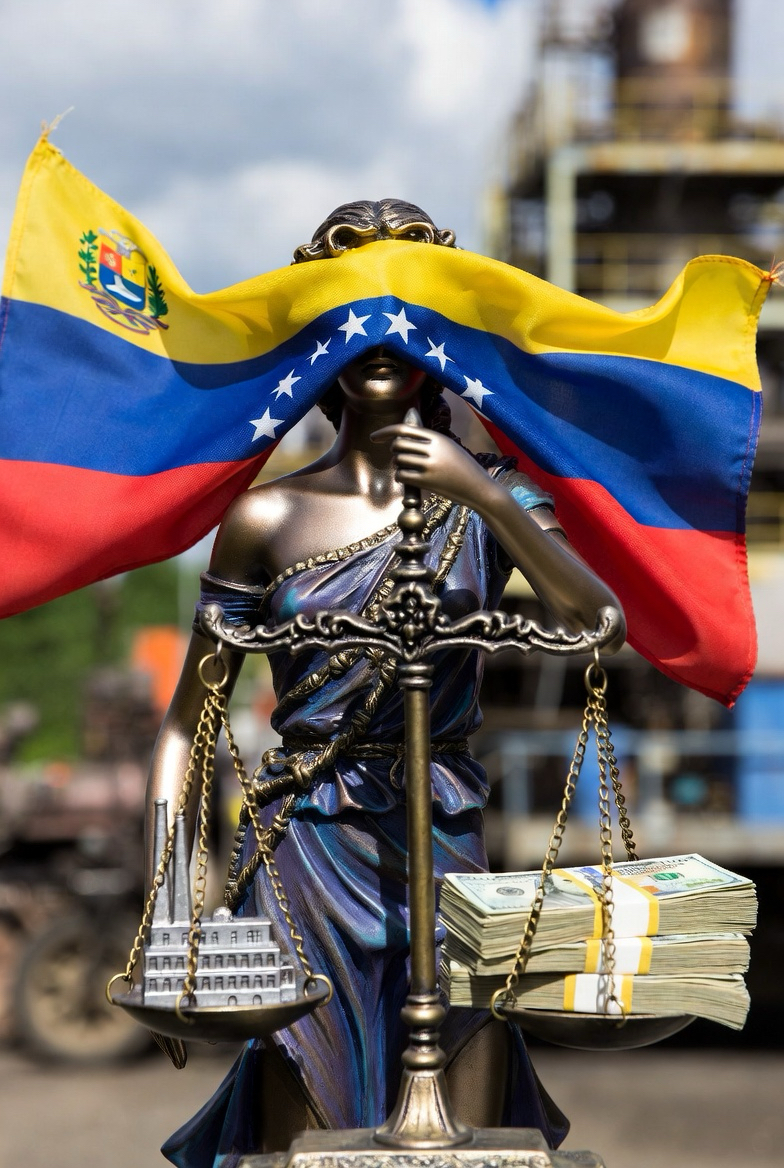
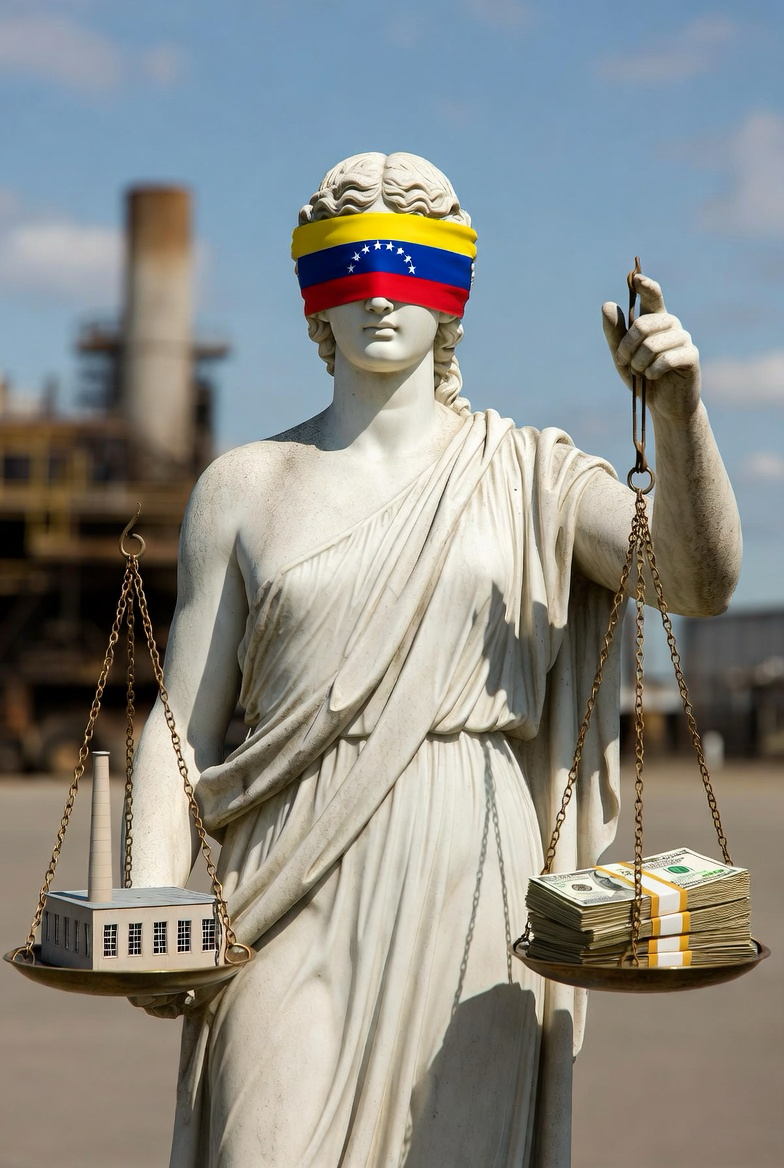
One of the most urgent acts of justice Venezuela must undertake at this historic juncture is to compensate the entrepreneurs who were assaulted by the chavista regime—stripped of their property and, with it, the hopes, efforts and sacrifices of a lifetime.
Many of the confiscated companies generated dozens, hundreds, and sometimes thousands of jobs. They served as role models for younger generations and for society at large. Built from nothing, they were founded on the essential principles of freedom, risk-taking, merit and competition. They became engines of prosperity and social mobility, training, motivating and fairly compensating Venezuelans who found in them a path toward professional growth, independence and dignity.
These companies flourished at a time when Venezuela was a nation of promise. Emigration was rare. On the contrary, the country stood as a symbol of opportunity, open to those willing to settle, work and raise families. Allied with the free world and deeply rooted in Western culture, Venezuela posted remarkable economic growth while achieving significant advances in healthcare and social security.
So strong was this reputation that it even found its way into popular culture. In 1961, British novelist Ian Fleming referred to the Venezuelan bolívar as one of the world’s strongest currencies—alongside the Swiss franc—in his novel Thunderball, reflecting the currency’s global credibility at the time.
Venezuelan entrepreneurs assumed risks and accessed reasonable credit to develop their ventures. In partnership with countries such as the United States, France and Spain, they expanded production, exchanged technology and talent, and opened domestic and international markets. Some industries reached technical standards comparable to those of Japan, Germany and the U.S., positioning Venezuela as a highly attractive emerging economy across sectors ranging from energy and petrochemicals to manufacturing, finance, tourism and culture.
That trajectory collapsed when the state grew beyond its proper role. What had once been a facilitator became an intrusive and inefficient actor, crowding out private enterprise and entrenching corruption. The decisive blow came in 1992 with the removal of Carlos Andrés Pérez, ending the last serious attempt to modernize Venezuela through openness, competition and meritocracy.
Under Hugo Chávez and later Nicolás Maduro, Venezuela adopted a systematic policy of expropriations, nationalizations and interventions, particularly in so-called “strategic” sectors. Estimates by organizations such as Cedice Libertad and Transparencia Venezuela indicate that more than a thousand private companies were affected, many of which collapsed, leaving production idle and workers without livelihoods.
These actions amounted to outright theft. While some owners have obtained favorable rulings in court, most continue to wait for justice—and for fair compensation.
As Venezuela looks toward a different future, justice for those who were dispossessed must come first. Private property is sacred. It is the cornerstone of freedom and the indispensable foundation of prosperity. The United States understands this principle. It is time for Venezuela to do the same.



Deja un comentario