
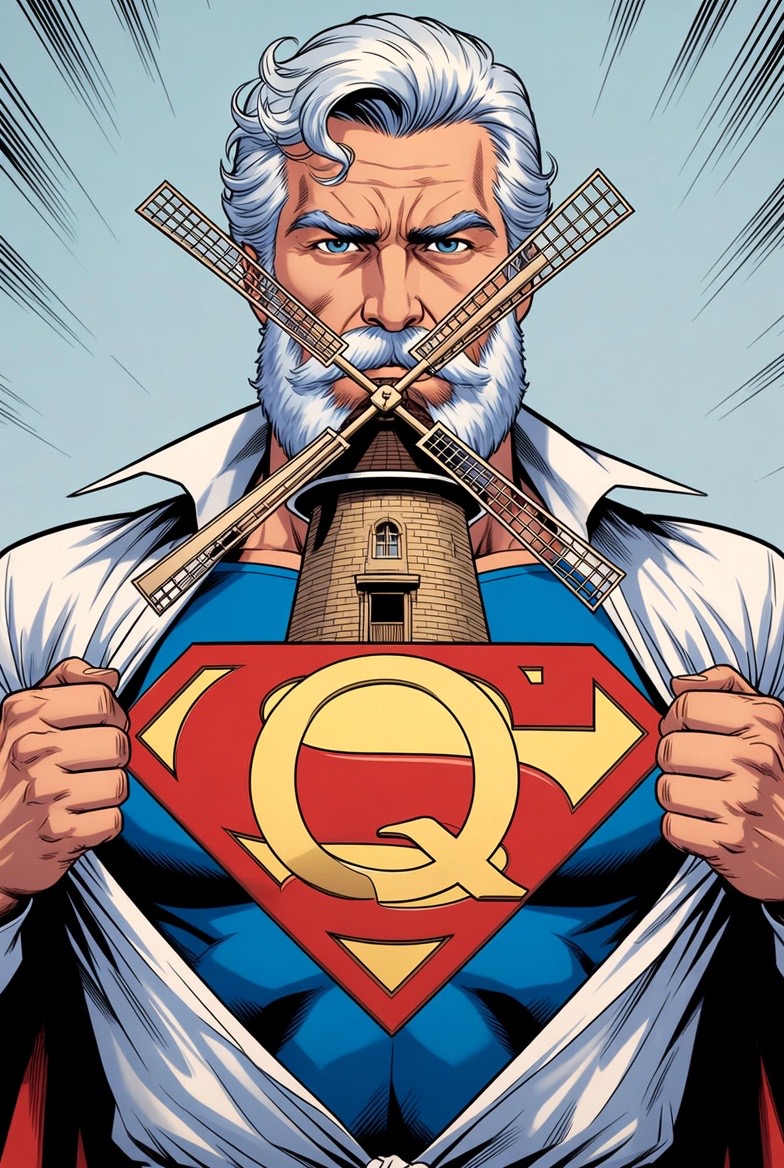
For more than four centuries, readers have agreed on one thing about Don Quixote: its protagonist is mad.
This consensus is so deeply rooted that it has become almost untouchable. Don Quixote, we are told, is a delusional man who mistakes windmills for giants, inns for castles, and peasants for princesses. His story is read as a tragicomic descent into illusion—a cautionary tale about the dangers of losing contact with reality.
But what if this interpretation is not only incomplete—but fundamentally wrong?
What if Don Quixote is not a victim of madness, but an architect of reality?
The Courage to Reinterpret the World
At the heart of this novel lies a question far more unsettling than literary criticism has been willing to admit: What is reality?
Modern philosophy has long wrestled with this problem. From Friedrich Nietzsche to Viktor Frankl, thinkers have suggested that reality is not simply given—it is interpreted, constructed, even chosen.
Don Quixote embodies this idea with radical clarity.
He does not merely misperceive the world. He redefines it.
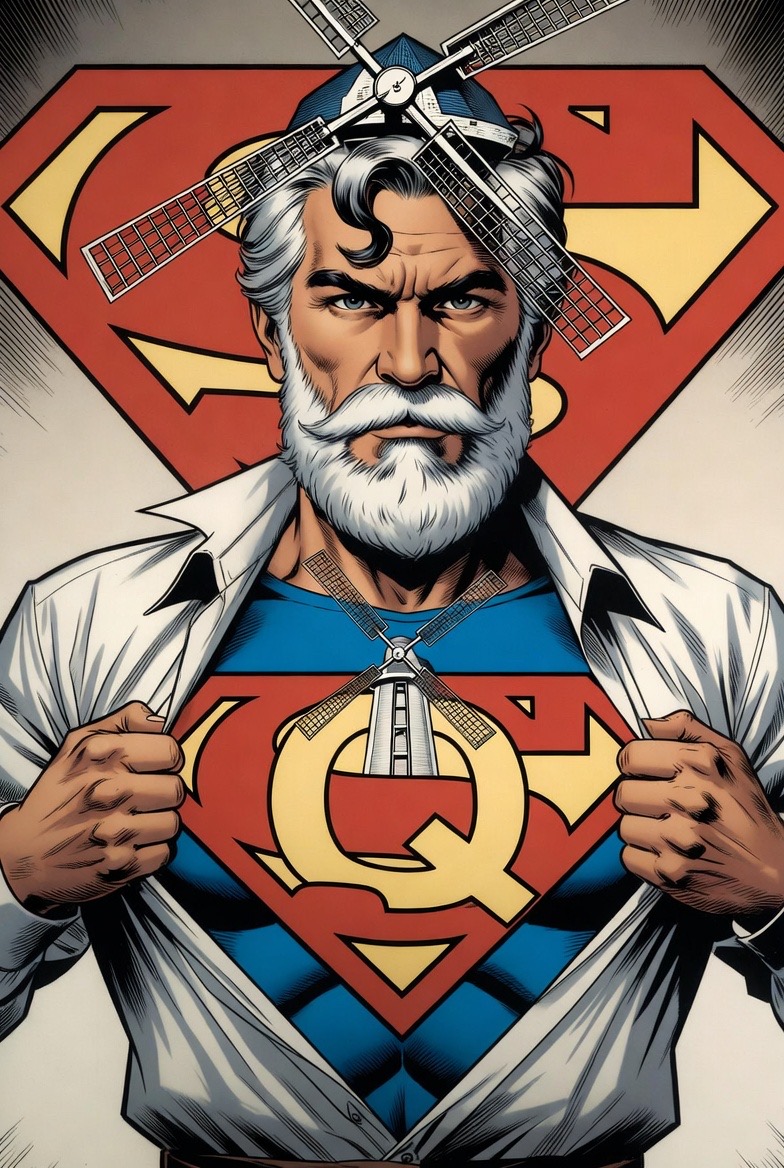
He looks at a windmill and chooses to see a giant—not because he cannot distinguish between the two, but because he refuses to accept a world stripped of meaning, heroism, and transcendence. In a barren reality, he introduces poetry. In a disenchanted age, he creates purpose.
This is not confusion. It is defiance.
Freedom as Creation, Not Escape
The traditional reading of Don Quixote assumes that freedom lies in aligning oneself with objective reality. To deviate from it is to fall into madness.
But this assumption deserves scrutiny.
Human beings do not experience reality directly. We filter it through language, culture, memory, and desire. What we call “reality” is, in practice, a shared interpretation—a negotiated framework that allows societies to function.
Within that framework, deviation is labeled error.
Yet history suggests otherwise. The individuals who transformed human understanding—scientists, artists, philosophers—were often those who refused to accept the given world as final.
Don Quixote belongs to this lineage.
He exercises a form of freedom that is rarely acknowledged: the freedom not just to act within reality, but to reinterpret its meaning. He does not escape the world. He rewrites it.
The Cost of Radical Individuality
Why, then, has he been dismissed as mad?
Because every act of radical individuality carries a cost.
Societies depend on shared assumptions. When an individual breaks from them, he becomes unintelligible—sometimes even threatening. The label of “madness” serves as a mechanism of containment: it neutralizes the challenge posed by alternative ways of seeing.
Don Quixote disrupts the consensus reality of his time. He refuses to play by its rules. And for that, he is ridiculed, beaten, and ultimately defeated—not because he is wrong, but because he is alone.
His tragedy is not that he cannot see the world as it is.
It is that the world cannot tolerate what he sees.
Reality, Meaning, and the Modern Crisis
In an age increasingly shaped by virtual environments, artificial intelligence, and competing narratives of truth, the question raised by Don Quixote feels more urgent than ever.
Is reality something we discover—or something we construct?
If it is constructed, then who has the authority to define it?
And what happens to those who choose differently?
Don Quixote forces us to confront a possibility that remains deeply uncomfortable: that meaning is not inherent in the world, but created by the individual—and that this act of creation may appear indistinguishable from madness to those who do not share it.
The Greatest Misreading
To call Don Quixote mad is to domesticate him—to reduce a profoundly subversive figure into a harmless eccentric.
But Cervantes’ genius lies precisely in resisting that simplification.
Don Quixote is not a warning against illusion. He is a testament to the human capacity to transcend a diminished reality. He reveals that the line between madness and freedom is not fixed, but drawn—and redrawn—by society.
In this sense, the enduring power of the novel lies not in its humor, but in its challenge.
Don Quixote asks us a question we are still unwilling to answer:
What if reality is not something we must accept—
but something we are free to create?




Replica a Don Quijote nunca estuvo loco: la mayor mala interpretación de la literatura occidental — y lo que revela sobre la libertad y la realidad – Energizando Ideas Cancelar la respuesta