

Author: Juan Carlos Sosa Azpúrua
Between 1922 and 1975, Venezuela experienced the golden age of its oil industry and, with it, one of the most remarkable economic transformations of the twentieth century. After a century of civil wars, caudillo uprisings, and fragile institutions, the country became the most attractive investment destination in Latin America and one of the world’s most dynamic emerging economies. That rise was not the work of the state: it was driven by private enterprise, in the oil sector and across all the industries that grew around it.
That prosperity turned Venezuela into a land of rebirth for those who had lost everything. Families and individuals arrived who had survived the Great Depression, the Spanish Civil War, racial and religious persecution in Europe—including the Nuremberg Laws and the Holocaust—World War II, fundamentalist revolutions, dictatorships in South America, Central America, and the Caribbean, totalitarian regimes in Europe, apartheid and colonialism in Africa, and poverty and communism in Asia and Eurasia. They came to rebuild their lives, to work, and to put down durable, productive roots.
The mindset that made this process possible rested on a simple yet powerful principle: respect for individual liberty and the conviction that it was possible to create and prosper through ingenuity, effort, and risk—without expecting handouts from the state or assuming that it should lead the productive process. Within that framework, industries—including hydrocarbons—were built by private capital under clear rules, not under state tutelage.
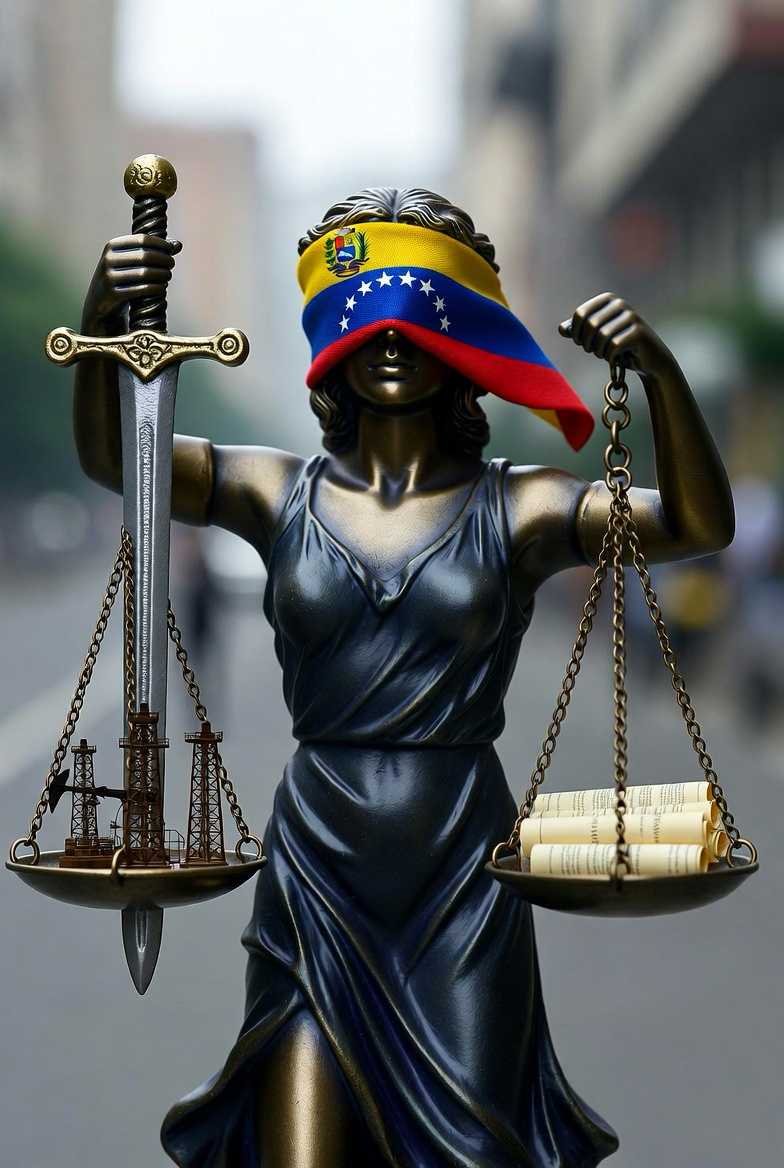
Oil, however, is a double-edged sword. It can power an entire economy, but it can also destroy it. The United States understood this risk from the outset and therefore conceived its hydrocarbons industry as an essentially private business, with the state acting as a regulator—not an entrepreneur—charged with calibrating rules, preserving competition, addressing environmental considerations, and safeguarding strategic interests.
It is no coincidence that the country pioneered the architecture of the modern oils oil business. John D. Rockefeller, founder of Standard Oil of New Jersey (today, essentially Exxon), designed the concept of the vertically integrated company: controlling the entire chain from exploration and extraction, through transportation, refining, and storage, to the final distribution and sale of derivatives. That model laid the foundations for an industry characterized by competition, innovation, and capital discipline.
Thanks to that philosophy, the United States is not only the world’s largest consumer of oil; it has also set production records, surpassing the traditional giants of the Middle East and the Caucasus. Technological advances—extraction from rock formations, enhanced recovery, and horizontal drilling—multiplied recoverable reserves and confirmed an intuition clearly expressed by Sheikh Yamani: the age of oil will not end for lack of oil, just as the Stone Age did not end for lack of stones.
Venezuela, by contrast, chose a different path. Beginning in the mid-twentieth century, intellectual and political myths solidified into public-policy dogmas: belief in the imminent exhaustion of reserves, a preference for high prices with low production, and the idea that “watchful” state-owned companies should serve as the industry’s stewards. These premises, associated with the influence of Juan Pablo Pérez Alfonzo and the political vision promoted by Rómulo Betancourt, seeped into the country’s bloodstream.
There was a brief interlude that began during Carlos Andrés Pérez’s second administration in 1989, marked by a “great shift” toward economic liberalization aimed at making the entire economy competitive. The appointment of Miguel Rodríguez to head CORDIPLAN was key to achieving this objective. Then, in 1990, from his position as president of PDVSA, Andrés Sosa Pietri designed the Oil Opening, successfully aligning hydrocarbons policy with the “great shift,” which produced tangible effects: Venezuela experienced the most significant economic growth in the world after China. However, that turn was demonized by the “established forces” of the time and failed to consolidate as a structural course. On the contrary, the country moved in the opposite direction.
The result has been a pernicious statism whose costs are now evident. The so-called “Dutch disease” or “resource curse”—the sword of Damocles hanging over oil economies—becomes lethal when oil is placed in the hands of the state: private investment is crowded out, corruption is incentivized, competitiveness is weakened, talent is expelled, and the entire productive apparatus is ultimately damaged. Other resource-rich countries took this risk seriously and protected themselves through institutional arrangements that limited state control and inoculated their development processes. Venezuela chose the opposite.
Today, that choice is especially evident in the Draft Reform of the Organic Hydrocarbons Law. Far from correcting course, the text functions as a hymn to mythological times: it revives false premises—reserve exhaustion, high-price/low-production strategies, dominant state-owned enterprises, and rigid fiscal schemes—and seeks to solve with straitjackets what requires incentives, capital, and freedom.
It is understandable to want to act quickly to attract the oil investments promoted by the President of the United States, which would greatly benefit the Venezuelan economy. In that sense, it is commendable to seek flexibility in the legal framework to make this possible, and I understand that this is the spirit of the reform under discussion in Venezuela’s National Assembly.
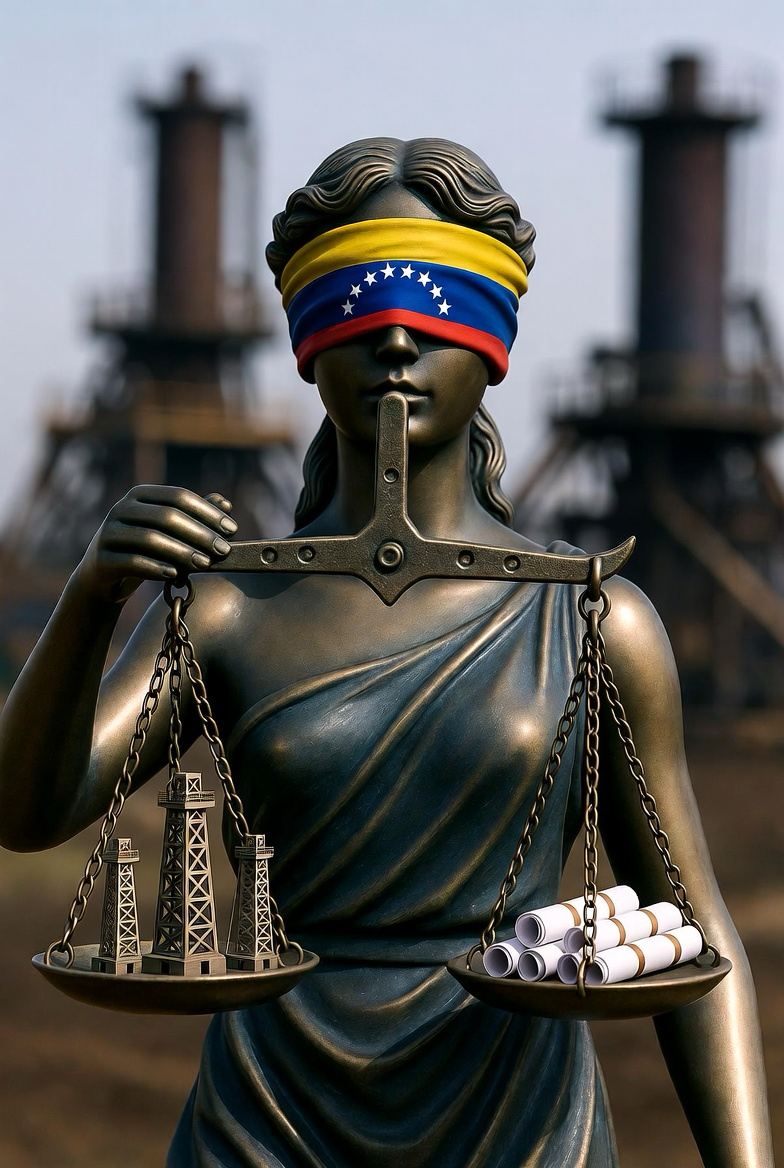
But reforming a law that does not work is not the right measure. It is like trying to put a new roof on a house whose columns are fractured. In the interest of speed, perhaps the best solution is to get into a time machine and return to Venezuela’s best oil era. Back then, there was a Hydrocarbons Law that worked perfectly to stimulate the country’s development. That law is the 1943 statute.
The National Assembly has most of the work already done. The proposal would be to repeal the current oil legislation and rescue that law, making the necessary adjustments to its wording and articles—especially those relating to the tax framework and dispute-resolution mechanisms (mediation and arbitration)—so that they adapt to the present without unnecessary complications. With such a legal mechanism, investments would accelerate.
We must accept that oil is no different from any other exploitable product: barley for beer, cattle for meat and milk, corn or spinach for food. All human industries rest on the same premise: the more ingenuity, effort, and capital invested, the greater the probability of success. The concept of “basic industry,” understood as a monopoly or state tutelage, rests on false assumptions. The only thing that is truly basic is production—and more is produced where there is greater freedom.
State intervention has strangled the oil sector: production is incentivized in other regions of the world, domestic capacity is diminished, price structures are encouraged that facilitate the emergence of competitors and the loss of markets, corruption and opacity are given room to grow, talent is displaced, and mediocrity is rewarded. If the real objective is to secure fiscal revenues for the state, logic compels a move in the opposite direction.
Comparative experience—and Venezuela’s own history—points to a clear alternative: turn oil into a business like any other, led by private companies eager to produce more in order to generate returns for their investors. In that environment, competition raises standards of excellence, transparency, and efficiency. The state’s role is to establish clear and equal rules of the game for all and to capture rents rationally through taxes on profits.
Attempting to appropriate 95 percent of the profits, or anything close to it, reduces the productive source to almost zero. Oil projects are costly, risky, and long-term. Nothing is collected from what is not produced. A lighter tax burden incentivizes investment; investment increases production; production raises profits; and profits expand tax revenues through income taxes. In this realm, less is more.
Therefore, the central debate is not how to “reform” a law built on false premises, but whether Venezuela is willing to repeal that scheme entirely and replace it with new legislation oriented toward First World development—one in which the individual and private enterprise lead the productive process, and the state fulfills its essential function without suffocating wealth creation. I understand that time is pressing and that action is needed quickly. That is why the proposal to rescue the 1943 Law (with the pertinent temporal adaptation) might be a good solution. One has to start somewhere.
Venezuela holds the largest oil reserves on the planet. It can attract the world’s leading energy companies and the industries that inevitably accompany them—infrastructure, construction, services, tourism—and generate virtuous cycles at every stage of the process. The decision is historic and urgent: persist in myth, or return to the freedom that once made the country an emerging power.





Deja un comentario