
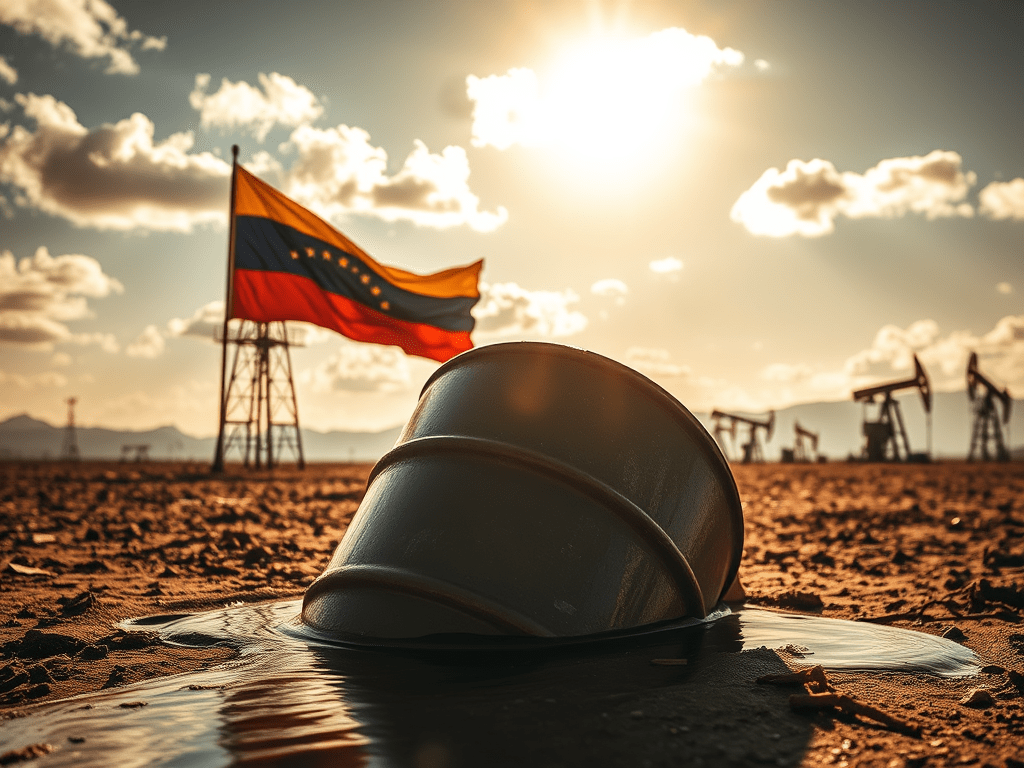
Debates over Venezuela’s oil assets often rest on a faulty premise: that foreign governments or corporations possess a legitimate claim to the country’s hydrocarbons. In fact, although U.S., British, and other international companies were instrumental in developing Venezuela’s oil industry, ownership of the subsoil has always resided with the Venezuelan State. Foreign operators extracted oil under legal frameworks that required the payment of royalties to the Republic of Venezuela, never the transfer of ownership of the resource itself.
From the early twentieth century until nationalization in 1975, oil companies operated under concessions governed by Venezuelan law, most notably the Hydrocarbons Law of 1943. When Venezuela nationalized the industry, it compensated foreign operators at considerable cost. In the 1990s, amid declining production and fiscal stress, Caracas again opened the sector to foreign investment through the Apertura Petrolera. International companies reentered the country under joint ventures, exploration agreements, and operating contracts signed with Petróleos de Venezuela, S.A. (PDVSA). None of these arrangements altered the foundational legal principle: ownership of the subsoil and hydrocarbons in situ remained vested in the Venezuelan State.
That principle matters because the collapse of the Apertura Petrolera in 2007—when President Hugo Chávez forced foreign operators to renegotiate or abandon their positions—has often been cited to justify extraordinary policy responses. Some companies received compensation; others did not. Predictably, disputes followed. But these conflicts were not resolved through unilateral seizures or ad hoc political decisions. They were adjudicated through international arbitration and judicial proceedings. Even in the most prominent case, ExxonMobil, Venezuela ultimately paid billions of dollars in compliance with arbitration awards. The process reaffirmed an essential norm of the international economic order: that disputes between states and investors are to be resolved through legal institutions, not political force.
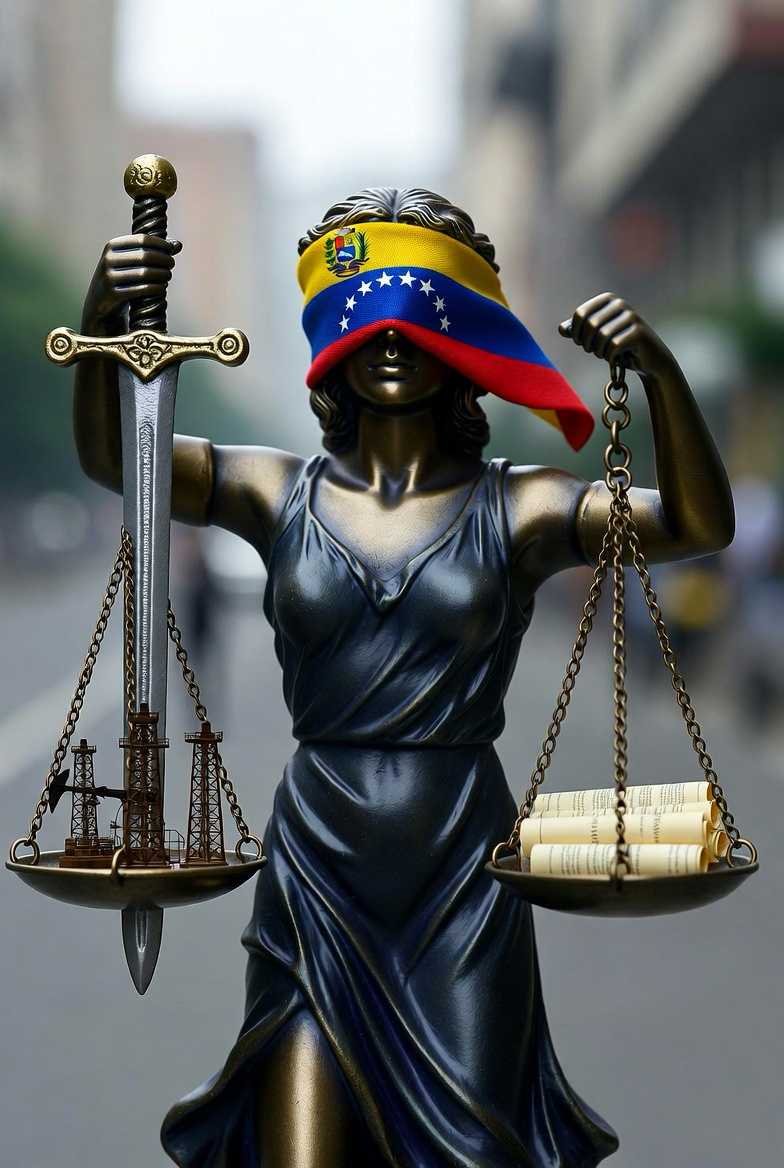
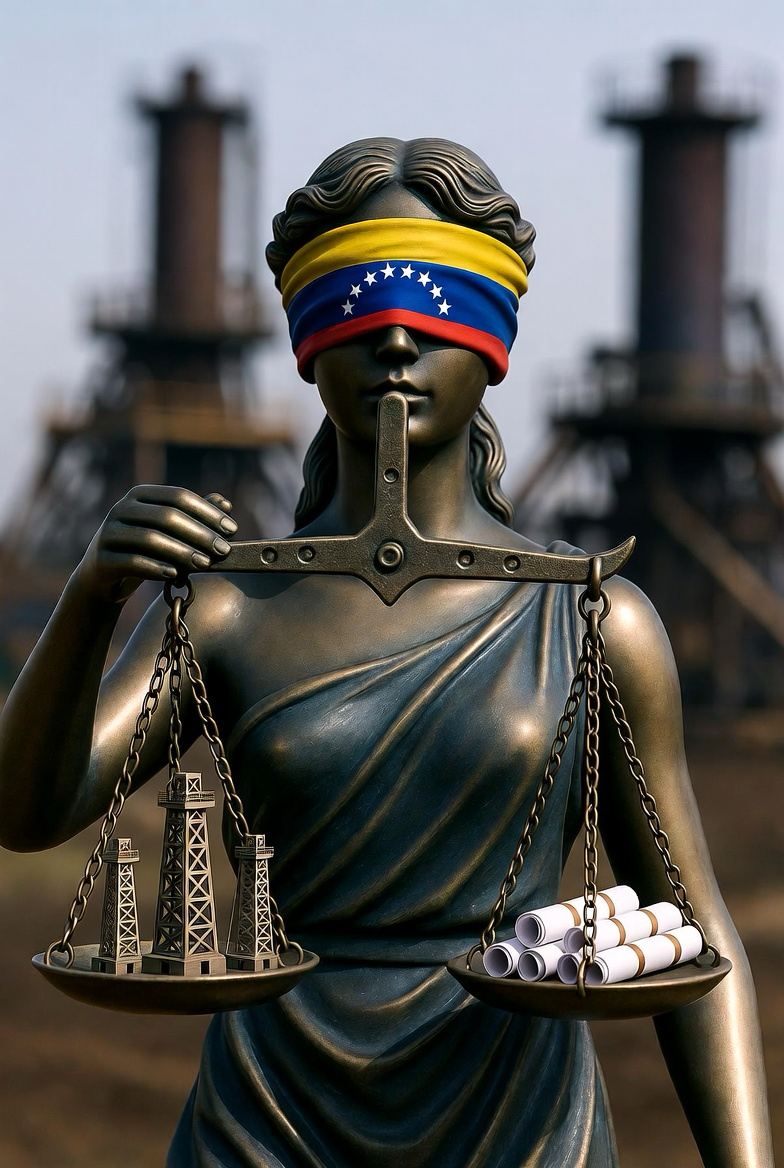
Criticism of Venezuela’s conduct is warranted. The Chávez government violated contracts, politicized PDVSA, and undermined investor confidence in ways that proved economically catastrophic. Yet acknowledging these failures does not imply that the United States—or any other country—has the authority to act as a self-appointed judge by confiscating Venezuelan oil assets without due process. Such actions would erode the very legal principles that underpin global investment and property rights, weakening U.S. credibility in defending the rule of law abroad.
The strategic implications extend beyond legal doctrine. For decades, U.S. policymakers have relied on sanctions, embargoes, and economic isolation as tools to pressure authoritarian regimes. The record, however, is mixed at best. In many cases, these measures have strengthened rather than weakened autocratic governments by concentrating economic control in the hands of political elites and allowing regimes to frame scarcity as the result of foreign aggression. Civilian populations bear the costs, becoming more dependent on state-controlled distribution systems and less capable of mounting sustained political resistance.
Cuba offers a stark illustration. Nearly seventy years of economic embargo have failed to dislodge the regime or produce meaningful political liberalization. Instead, the embargo has provided Havana with a durable external scapegoat while contributing to long-term economic stagnation. Venezuela risks following a similar path, with sanctions reinforcing authoritarian resilience rather than facilitating democratic transition.
History also warns of the dangers of economic coercion divorced from credible diplomatic and legal pathways. The U.S. oil embargo imposed on Japan in 1937 was intended to restrain aggression; instead, it contributed to strategic escalation that culminated in the attack on Pearl Harbor. The analogy is not exact, but the lesson is enduring: economic pressure, when perceived as existential and unilateral, can provoke destabilizing responses rather than compliance.
None of this suggests abandoning accountability or tolerating expropriation. Rather, it underscores the importance of pursuing accountability through institutions that reinforce, rather than undermine, international norms. Arbitration mechanisms, multilateral diplomacy, and coordinated legal action provide avenues to address legitimate grievances without eroding the rules-based order the United States has long championed.
In the Venezuelan case, the temptation to conflate moral outrage with legal entitlement is understandable but dangerous. Confiscating oil assets without due process may satisfy short-term political objectives, but it carries long-term costs: diminished legal credibility, weakened investment protections, and precedents that could be turned against U.S. interests elsewhere. A strategy grounded in law, institutional legitimacy, and historical realism offers a more sustainable path—one that aligns principles with practice and restraint with strategic purpose.





Deja un comentario